
Dot-and-dab is not brick and it is not standard plasterboard. It is plasterboard fixed to brick or block with adhesive dabs, which leaves a hidden gap behind the board. That gap changes everything about how a TV should be fixed.
This is where many failed installations start. Installers treat it like a solid wall, use the wrong fixings, and the bracket fails. We specialise in difficult wall types and check the gap before choosing any fixing method.
With 10+ years of difficult wall experience, we check the hidden gap first and choose the fixing method on site.
Yes, when the gap behind the board, the wall behind it, the TV weight, and the bracket type are all checked first.
The hidden gap is what makes dot-and-dab different. Standard fixings do not bridge it properly. Short screws can compress the board instead of gripping anything solid. The bracket may feel tight at first and then gradually work loose.
We check what is behind the board before choosing how to fix into it. That is where dot-and-dab jobs need to start.
Dot-and-dab TV mounting failures happen because the hidden gap behind the plasterboard is ignored. These are the most common mistakes we see when repairing unsafe or poorly installed TV brackets.
Some installers drill straight in as if it were solid masonry. But the plasterboard sits in front of the brick with a gap behind it. Standard masonry fixings sized for brick do not work the same way here.
A fixing that does not reach past the gap has nothing solid to grip. Short screws and standard plugs are one of the most common reasons brackets come loose on dot-and-dab walls.
If the wrong fixing compresses the plasterboard instead of bridging the gap, it can damage the board and weaken the fixing point. This is not always obvious until the bracket starts to move.
The bracket type affects how much stress goes into the fixing points. A heavy full-motion bracket on a dot-and-dab wall without proper assessment puts more load on the wall than a flat or tilt bracket. The bracket choice matters as much as the fixing.
Not all dot-and-dab walls are the same, so we inspect the wall before deciding how to mount your TV. From checking the hidden gap to testing the finished installation, every step is carried out to ensure a safe, secure, and professional result.
We tap the wall to confirm the wall type and listen for any areas that sound different. Dot-and-dab often has a distinctive hollow sound, but not always uniformly across the wall.
Our lead installer may make a small hole before drilling the bracket fixings. This lets us check the cavity depth, wall condition, and what is directly behind the board at that point.
The gap behind dot-and-dab boards varies. Knowing the depth helps us choose the right fixing length and method.
We scan before drilling. Hidden cables and pipes are a risk on any wall type. Dot-and-dab walls are no different.
The method is decided after the inspection. It depends on the cavity depth, what the brick or block behind looks like, the TV size, and the bracket type.
Every fixing point is checked before the TV goes on. The bracket is levelled before the screen is attached.
We agree the cable route before drilling. Hidden cables or trunking, whichever suits the wall and the client.
Full bracket test before we leave. Area tidied. Dust and packaging cleared.
Dot-and-dab fixings need to do more than hold the front plasterboard. Depending on the wall, we may use Corefix, Rawlplug fixings, long masonry screws or steel toggles. The right choice depends on the TV size, bracket type, gap depth and the brick or block behind the board.
The aim is to support the bracket properly without letting the plasterboard take the load on its own.
Where the gap and wall behind allow it, our lead installer may fix directly through the board into the brick or block behind. This gives a stronger fixing point when it is possible. We only do this where it is safe and suitable after inspection.
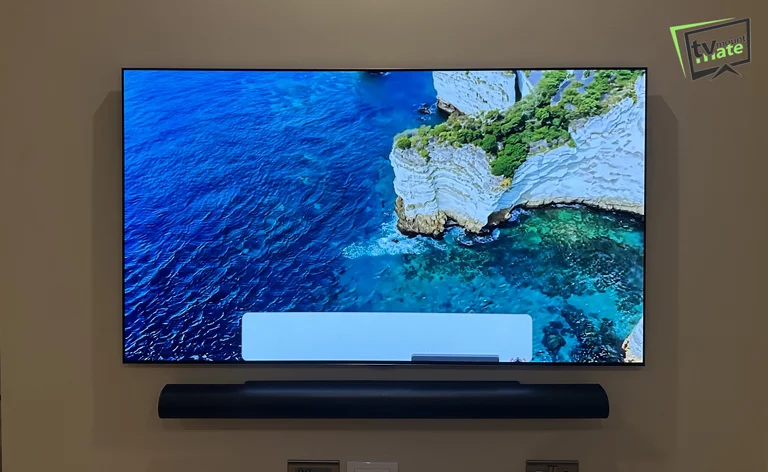
LG G-Series TVs are built to sit flush. The screen sits millimetres from the wall surface. Dot-and-dab walls often have a gap of only 1cm to 3cm behind the board. That creates problems that are easy to miss until the TV is already in place.
Things that catch clients out on installation day:
Some LG G-Series models have a power cable attached directly to the TV. Removing it may affect the warranty. The cable needs space behind or below the TV to sit without forcing the screen away from the wall.
A standard plug body is wider than many people expect. On a flush-mount TV, it can push the bottom of the screen away from the wall if there is no space to route it.
Standard HDMI cables have connectors that stick out. On a flush TV this can tilt the screen forward. Ultra-slim HDMI cables or right-angle connectors are often needed.
If a soundbar is being wall-mounted below an LG G-Series TV, the soundbar power cable clearance also needs checking. Space behind the board is limited on dot-and-dab walls.
Every LG G-Series job on a dot-and-dab wall is different. Our lead installer checks the TV model, cable layout, and wall gap before deciding on the approach. There is no single method that works for all of these jobs.
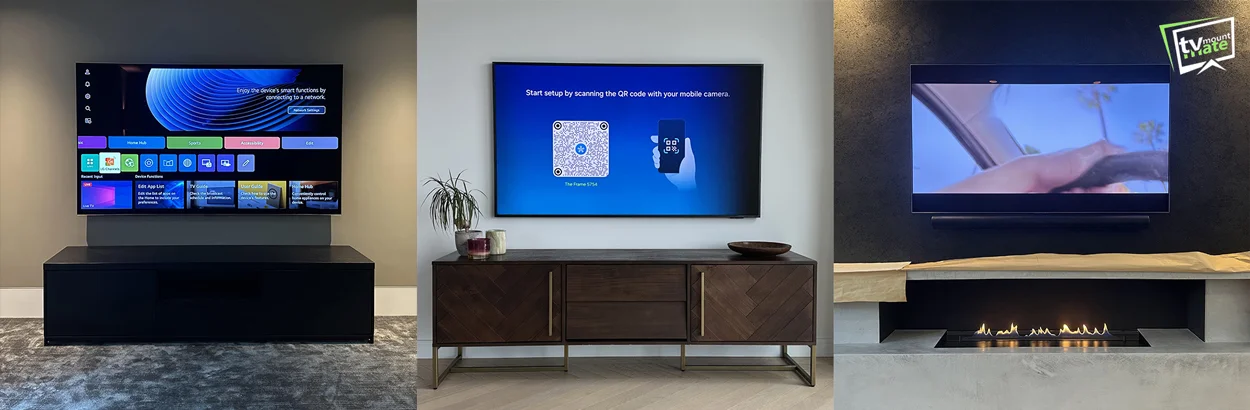
Cables can often be hidden on dot-and-dab walls. The gap behind the board gives cables a route to run down the wall and out at the bottom.
Whether it works depends on the cavity depth, the cable route, the TV type, the socket position, and the client’s budget.
Trunking may be the better option when:
The client is renting · The cavity is too shallow for safe cable routing · The route has obstacles or hidden services · The client prefers a simpler and lower-cost finish
We agree on the cable plan before drilling. We will not start a hidden cable route and then discover mid-job that it cannot be completed safely.
See how we’ve successfully mounted TVs on challenging dot-and-dab walls, from large-screen installations to rescue jobs where previous fixings had failed.
One of the larger dot-and-dab jobs we have completed. 98-inch Samsung DU9000 on a dot-and-dab wall using a flat bracket. Our lead installer used long masonry screws and steel toggles after checking the wall on site. Cables managed with neat trunking. When the wall, bracket, and fixing method are right, large TVs can be mounted safely on dot-and-dab walls. Quote provided on enquiry
A client contacted us late in the evening after their TV had come off a dot-and-dab wall. A previous installer had used the wrong fixings and had not checked the gap behind the board. We replied the same evening, explained what had gone wrong, arrived the next day with the right tools and bracket, completed the installation properly, tidied up, and explained to the client how to move the TV safely going forward. Quote provided on enquiry
Most dot-and-dab walls can support a TV when the wall behind the plasterboard, the cavity depth, the bracket and the fixing method are suitable. However, some conditions require extra checking or a change of plan. We explain any concern before drilling and agree the safest practical option with you.
These situations do not always mean the job cannot be done. They mean we will check carefully and talk to you before we start anything.
Dot-and-dab walls can be confusing because they often sound hollow, but they are not the same as standard plasterboard walls. These answers explain how we check the wall, choose the right fixing method, and plan cable routes before mounting a TV safely.
Yes, when the wall is checked properly. Dot-and-dab walls have a gap behind the plasterboard that changes the fixing method. We check the gap, the wall behind it, and the bracket type before we choose how to fix. We do not treat it like a brick wall or a standard plasterboard wall.
No. Standard plasterboard sits on a timber or metal frame with a cavity behind it. Dot-and-dab plasterboard is bonded to brick or block using adhesive dabs. The gap behind the board is smaller and the fixing method is different. Many customers describe a dot-and-dab wall simply as a wall that sounds hollow when tapped.
There is no single best fixing. It depends on the cavity depth, the wall behind the board, the TV size, and the bracket type. We use Corefix, Rawlplug, long masonry screws, and steel toggles depending on what the wall inspection shows. Where it is possible and safe, we fix directly through the board into the brick or block behind.
Often yes. The gap behind the board can give cables a route to run out of sight. Whether it works depends on the cavity depth, the cable route, the TV model, and the socket position. Where hidden cables are not practical, neat trunking is the cleaner option. We agree the cable plan before drilling.
Yes, but it needs careful planning. LG G-Series TVs are designed to sit flush to the wall, and dot-and-dab walls often have a very small gap behind the board. This affects power cable clearance, HDMI connector depth, and plug space. Our lead installer checks the TV model, cable layout, and wall gap before starting. There is no standard approach that works for all LG G-Series jobs on dot-and-dab walls.
Look through our wall-type guides, pricing, recent work and service areas before you book.
No deposit. Pay on completion. Fixed price before any work begins.