
Plasterboard is the wall type many installers get wrong. The wrong fixings, a missed stud, or the wrong bracket can make the TV unsafe. TV Mount Mate has completed 2,000+ plasterboard TV installations across London, Kent, and Essex, including jobs where big retailers or handymen said no.
Yes, when the wall is checked properly and the right fixing method is used.
Plasterboard is not the problem. Poor judgement is. Most failed plasterboard jobs happen because someone uses the free plugs from the bracket box, skips the stud check, or fits a full-motion bracket without thinking about the extra pull it puts on the wall.
We check the wall before choosing any fixing method. The method is decided on site, based on what is actually in the wall. Not guessed in advance.
We have safely mounted TVs on plasterboard walls that other installers walked away from. A plasterboard can hold a large TV when the assessment is done properly.
Most bracket box plugs are not designed for plasterboard. They have nothing solid to grip inside the wall. Under the weight of a TV, they compress the board and gradually pull through. This is one of the most common rescue jobs we deal with.
Studs are the strongest fixing point on any plasterboard wall. If an installer does not locate them before drilling, they miss the best fixing opportunity on the wall. We scan every wall before making a single hole.
A heavy full-motion bracket on a plasterboard wall without proper assessment is a problem waiting to happen. The bracket type affects how much load the wall carries and how the fixings are chosen. One bracket does not suit every wall.
A full-motion bracket puts far more pressure on the fixing points than a flat bracket. When the arm extends, it levers away from the wall. If the fixings and fixing layout were not planned for this, the bracket can start to move over time.
In Chigwell, a client booked Currys to mount their 85-inch TV on a plasterboard wall. Currys said the wall was too weak and the job could not be done safely. The client contacted us. We assessed the wall on arrival, chose the right fixing method for the wall construction and TV size, and completed the installation the same day.
This is the kind of job we are known for. Not every plasterboard wall is straightforward, but most of the jobs big retailers and handymen decline can be done safely when the person doing the work understands the wall.
Every plasterboard wall is different, so we follow a careful assessment and installation process on every job. From checking the wall to testing the finished installation, each step is designed to ensure your TV is mounted safely and securely.
We look at the plasterboard type, the board condition, and whether there are any obvious risks before anything else.
Our lead installer scans every wall before drilling. He has a Level 2 Electrical background and follows safe working practices in line with BS 7671 when checking cable routes before drilling.
The bracket type changes the fixing method. A flat bracket is different from a full-motion arm. We check both before choosing how to fix the bracket to the wall.
The method is decided on site. It depends on the wall construction, stud position, cavity depth, TV size, and bracket type. We never use a one-size-fits-all approach.
Every fixing point is checked before the TV goes on. The bracket is levelled and tested before the screen is attached.
Full range of motion tested where the bracket allows. On full-motion brackets, we test at full extension before we consider the job done.
If cable concealment is part of the job, we route cables through the wall cavity using brush plates. We only do this where the route has been checked and it is safe to do so.
We tidy up before leaving. The room should look the same as before we arrived, minus the cables on show.
Plasterboard fixing depends on what is behind the board, not just what the wall looks like from the outside. We check the stud position, cavity depth, bracket type and TV size first, then choose the fixing method after the wall has been assessed.
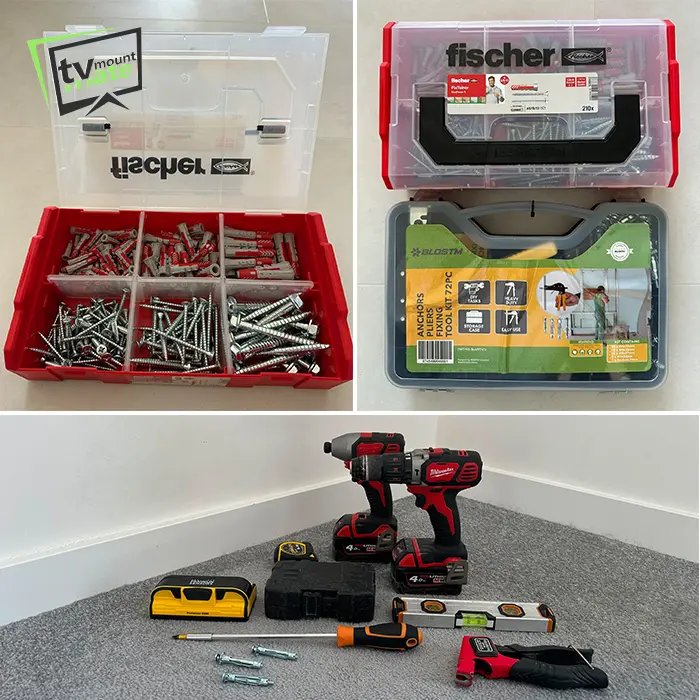
We never use the fixings that come in the bracket box on plasterboard. They are not built for this. The TV is too valuable to cut corners on the fixing method.
A larger TV does not mean the job is impossible on plasterboard. It means the assessment needs to be more careful.
We have mounted 65-inch, 77-inch, and 85-inch TVs on plasterboard walls that other installers walked away from. One of the largest recent jobs was a 100-inch Hisense in Bexley, mounted on a plasterboard wall using a VonHaus flat bracket from Amazon, a mix of steel toggles, and direct stud fixing. Cables were hidden inside the wall.
The bracket type matters more than most people realise. A flat bracket spreads the load evenly and puts less pressure on the fixing points. A full-motion bracket levers away from the wall when extended and needs a more detailed fixing layout. We plan for this before we drill.
For most plasterboard walls, yes. There is usually a cavity behind the board, which gives the cables a natural route to run out of sight. We use small entry and exit points with brush plates for a clean finish.
Cable hiding is not always guaranteed without checking the route first. We check the cavity, the cable path, and any obstacles before we commit to concealment. If a power socket needs moving to a different side of the room, a separate electrician may be needed for that part. We can advise on the best route before any work starts.
If you are renovating and the plasterboard is not finished yet, contact us before the boards go up. We can help plan the TV position, socket placement, and cable route so everything is ready when the room is done.
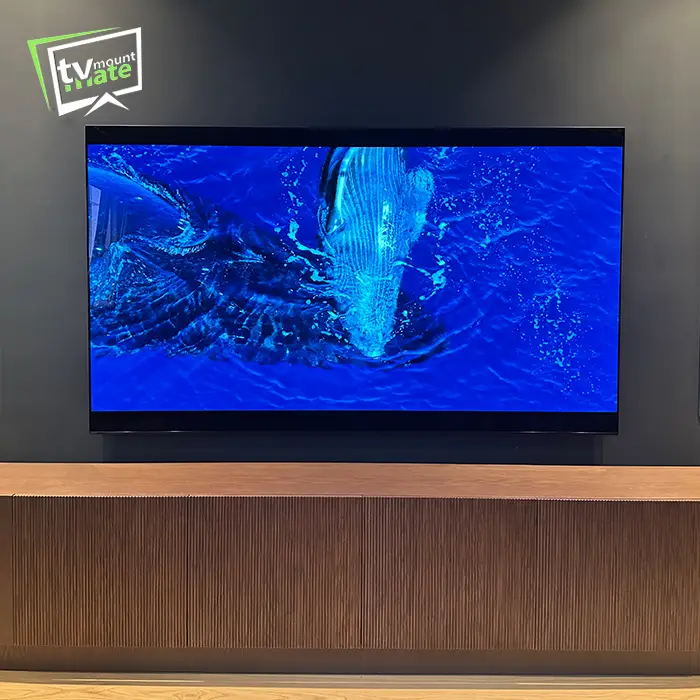
Here are a few real plasterboard wall installations completed by TV Mount Mate. These jobs include large TVs, failed install rescues, and cases where other installers said the wall was not suitable. Every plasterboard job was checked on site first, then fitted using the right fixing method for the wall, bracket, and TV size.
Currys declined to mount this 85-inch TV and told the client the plasterboard wall was too weak. We assessed the wall on arrival, chose the right fixings for the wall construction and TV weight, and completed the job the same day.
A previous installer had used standard wall plugs on plasterboard without locating the internal studs. By the time the client contacted us, the TV had already started pulling away from the wall. We replaced the bracket with a wide-plate mount to spread the load, installed heavy-duty plasterboard fixings, and secured additional points directly into the studs. Stable at full extension.
100-inch Hisense on a plasterboard wall using a VonHaus flat bracket. Mix of steel toggles and direct stud fixing. Cables hidden inside the wall cavity with brush plates. Proof that large TVs can be mounted on plasterboard when the wall and fixings are assessed properly.
A local handyman told the client this size TV could not be mounted on a plaster wall safely. We offered same-day service, arrived within 2 hours, and completed the installation using professional metal plasterboard fixings.
Most plasterboard walls can support a TV when the wall, bracket and fixing method are suitable. However, some conditions need extra checking or a change of plan before we proceed. We explain any concern before drilling and recommend the safest practical option.
We rarely walk away from plasterboard jobs, but we will always warn you if the wall, bracket, or cable route changes the plan.
Real reviews from clients who trusted us to mount TVs on plasterboard walls safely, including large TVs, hidden cable installations, and jobs other installers said could not be done.
 5.05.0Top Rated ServiceVerified by TrustindexTop Rated Service
- 5.0 Excellent rating Last 12 months
- New reviews collected regularly Recent review activity detected
- Leading Service Google Maps rating and review data
- Responds to customer reviews 100% response rate within 48 hours
- Verified by Trustindex Based on real customer reviews Learn more
Posted on Google
 faisal145 days ago
Trustindex verifies that the original source of the review is Google.
I would like share my experience with Tv mount mate. Found Tv mount mate on google and my experience was amazing. They mounted a 65 inch samsung Tv on plaster board wall in sw11 post code. He is extremely knowledgeable in regards to wall mounting large and expensive TVs. When I spoke to him He build trust and confidence to get my tv mounted on the wall. He is an expert on his trade.Posted on Google Nina Taherzadeh146 days agoTV Mount Mate mounted a 75 inch samsung TV and also installed soundbar on a plasterboard wall in NW3 postcode. He was very experienced, and expert on plasterboard wall. He explained evand the process before he mounted the TV which build trust to let him mount our TV on plasterboard. Amazing service highly recommend.+0Posted on Google
 Adam Theaker168 days agoTV Mount Mate provided me TV mounting service. Rony mounted a Samsung s95F Oled TV on a plasterboard wall with a full motion bracket and did a fantastic job. He was well experienced and I trust the service and job - looks excellent
Answers to the questions we hear most before clients book a TV mounting visit.
Yes, when the wall is checked and the correct fixing method is used. Plasterboard is not the problem. The problem is using the wrong fixings or skipping the wall check. We have completed over 2,000 plasterboard TV installations and have never relied on bracket box plugs.
Yes. We have mounted TVs up to 100 inches on plasterboard walls. Larger TVs need a more careful assessment, more fixing points, and sometimes a different bracket type. We check all of this before we drill anything.
In most cases, yes. Plasterboard walls usually have a cavity behind them that gives cables a natural route to run out of sight. We use brush plates at the entry and exit points for a clean finish. We check the route first to make sure it is safe and clear before committing to concealment.
There is no single best fixing for every plasterboard wall. We choose the method on site based on the wall construction, stud position, cavity depth, TV size, and bracket type. We use GripIt, GeeFix, Fischer DuoTec, steel toggles, direct stud fixing, and other methods depending on what the wall and job need.
Get in touch before you give up. We have completed many jobs that big retailers and handymen walked away from, including an 85-inch TV in Chigwell that Currys declined. A refusal from a general installer does not mean the job cannot be done. It often means they were not comfortable with plasterboard. We are.
Compare wall types, cable options, prices, recent work and service areas before you book.
No deposit. Pay on completion. Fixed price before any work begins.
