
Chimney breasts are one of the most common places clients want a TV, but they need careful planning. Height, heat, bracket choice, and cable routes all need checking before anything goes on the wall. TV Mount Mate mounts TVs on chimney breasts and above fireplaces across London, Kent, and Essex, with heat checks where needed and honest advice before drilling.
Yes, in most cases. But chimney breasts need more planning than a flat wall. The fireplace type, wall surface, heat level, bracket choice, and cable route all affect how the job is done.
We do not treat chimney breast jobs as a standard wall mount. Our lead installer checks everything first. If something changes the plan, we tell you before any work starts.
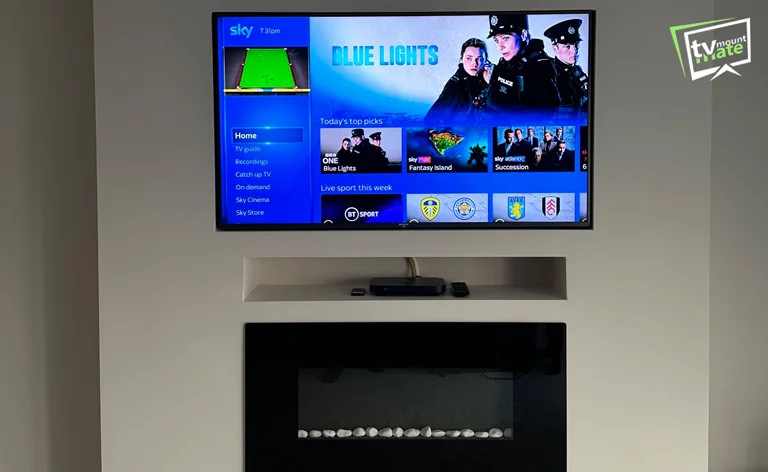
Mounting a TV above a fireplace can work well, especially when the chimney breast is the only practical wall in the room. This is common in rentals, smaller living rooms, and rooms where the sofa faces the chimney breast directly.
But it is not always the right choice.
If the fireplace is high, the TV can end up too far above eye level. Watching from a sofa for long periods with your neck tilted upward is not comfortable. A tilt bracket helps bring the screen angle down, but it does not fix a position that is simply too high.
Heat is the other concern. Not every fireplace causes a problem, but some do. An open fire, wood burner, or strong gas flame can push heat higher than expected. A decorative or rarely used fireplace is usually less of a concern, but the position still needs checking.
We will tell you honestly if we think the position is not ideal before we mount anything.
Many fireplace TV installations fail because key checks are skipped. Here are the issues we assess before drilling a single hole.
Not every fireplace causes a heat problem, but some do. Mounting a TV without checking the heat level first is a risk. Our lead installer checks heat where needed before confirming a safe position for the TV and soundbar.
The chimney breast can look like a natural place for a TV, but the height is not always right. If the mantel is tall or the fireplace sits high on the wall, the TV can end up above a comfortable viewing angle. We flag this before mounting.
A flat bracket above a high fireplace often leaves the screen pointing at the ceiling rather than at the viewer. A tilt bracket is usually the better choice. Full-motion brackets can work but need the wall strength and viewing angle assessed first.
Chimney breasts can be awkward for cables. Drilling without a plan can leave cables with nowhere clean to go. We look at the cable route before making any holes, not after.
From checking fireplace heat to planning cable routes, every step is completed before your TV is mounted.
We ask about the fireplace before we arrive and confirm on site. Electric, gas, decorative, blocked, or live fire all affect the approach.
For working fireplaces, our lead installer may turn the fire on and use a heat gun to measure how high the heat travels up the wall. This helps confirm a safe position for the TV and soundbar before anything is fixed.
Chimney breasts can be plastered brick, exposed brick, plasterboard over brick, or built with specialist heat-rated board near the fire. The surface affects the fixing method.
We scan the wall before drilling. Chimney breasts can have hidden cables, gas pipes, or other services nearby.
We advise on bracket type based on the fireplace height, TV size, and viewing position. We will say if a tilt bracket is needed or if full-motion makes sense for that wall.
The fixing method depends on what is behind the surface. We check before choosing. We do not use the fixings that come in the bracket box.
We agree on the cable route before drilling. Trunking, alcove routing, void routing, or a hidden route all depend on the fireplace type, wall build, and socket position.
Bracket levelled, TV tested, full range of motion checked where the bracket allows. Area vacuumed and tidied before we leave.
Hiding cables on a chimney breast depends on the wall, the fireplace, and where the sockets are. There is rarely one single answer that works for every job.
Options we use depending on the job:
We do not chase deep channels into chimney breasts. It can damage the wall and is not always the safest option. Instead, we use neat surface trunking, route cables into the side alcove, or use a chimney void where it is safe and accessible.
If you are renovating and the chimney breast is not finished, contact us before the boards go up. We can help plan the TV position, cable route, and socket placement so everything lines up properly when the room is done.
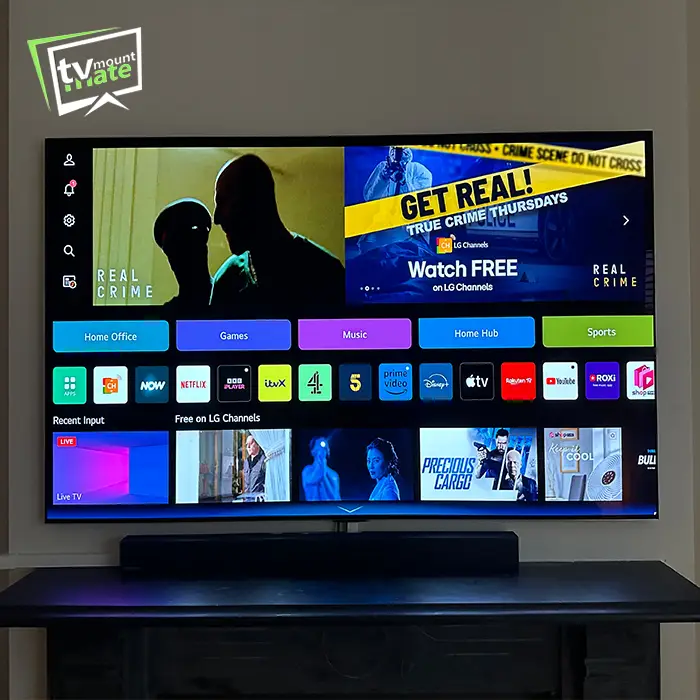
The right bracket improves viewing comfort and safety, especially when the TV is mounted higher on a chimney breast.
A flat bracket keeps the TV close to the wall and works well when the fireplace is low and the viewing height is comfortable. If the fireplace is high, a flat bracket often leaves the screen at an awkward angle.
For most above-fireplace installs, a tilt bracket is the better choice. It allows the screen to angle downward toward the viewer, which makes a real difference when the TV is higher than ideal. We recommend this on most chimney breast jobs.
These can work on chimney breasts when the wall is strong enough and the client needs to view the TV from different angles. We assess the wall and the fixing layout before recommending one. A full-motion bracket on a weak or shallow chimney breast is not something we would fit without checking first.
If a soundbar is part of the job, we plan its position alongside the TV, not as an afterthought. On working fireplaces, the soundbar position needs to stay clear of heat. We check this during the heat assessment.
We match our tools and fixing methods to the wall surface, ensuring a secure installation without unnecessary damage.
Chimney breasts are often plastered brick, exposed brick, or plasterboard over brick. Some have specialist heat-rated boards fitted close to the fireplace opening. The fixing method is chosen after checking what is behind the surface on site.
Tiled, stone, slate, or marble surfaces need extra assessment before any drilling. We check these carefully and advise before we start.
See examples of completed chimney breast and above-fireplace installations across London, Kent, and Essex.
The client wanted a TV and soundbar above a custom-built live gas fireplace. The builder had fitted special heat-rated board over the plasterboard wall for the real fire. Our lead installer turned the fireplace on for one hour and used a heat gun to measure how far the heat travelled. The soundbar position was chosen first because it sat closer to the heat source than the TV. We then worked upward to position and mount the TV safely. Clean, safe finish with both TV and soundbar placed correctly after heat checking.
Currys told the client the chimney breast wall was not suitable and that the bracket was wrong for the job. Rony checked the wall on arrival, advised the correct bracket, and completed the installation. The client said we arrived within an hour and completed the job perfectly.
Large-format TV mounted on a chimney breast using the original LG bracket. Cables routed and hidden behind the plaster wall for a clean finish.
Some installations require extra checks before work begins. We explain any concerns and discuss the best approach with you first.
None of these mean the job cannot be done. They mean we will talk to you first before anything goes into the wall. If there is a concern about the gas fire itself, we will recommend speaking to a qualified Gas Safe engineer before we proceed.
Find answers to the questions clients ask most about mounting TVs on chimney breasts and above fireplaces.
Yes. Chimney breasts are common in many London, Essex and Kent homes. The approach depends on the wall surface, what is behind it, and whether the fireplace is active.
Yes, when the position is safe and practical. We check the fireplace type, measure heat where needed, and advise on the right bracket and height before mounting anything. If we think the position is too high or the heat is a concern, we will tell you before we drill.
It depends on the fireplace and the position. Some fireplaces do not produce enough heat at TV height to cause a problem. Others do. Our lead installer checks heat levels with a heat gun on working fireplaces before confirming the position. We will not place a TV somewhere we are not comfortable with. We cannot guarantee that heat will never affect a TV, which is why the check matters.
Sometimes yes, sometimes partially. It depends on the wall construction, fireplace type, void access, and socket position. We look at the cable route before we drill and agree on the best option with you. We do not chase cables into chimney breasts, but there are often cleaner options than plain trunking depending on the job.
In most cases, a tilt bracket. It allows the screen to angle downward toward the viewer, which is important when the TV sits above a mantel or fireplace. A flat bracket can work when the fireplace is low and the viewing height is comfortable. Full-motion brackets can work on chimney breasts but need the wall and the viewing position assessed first. We advise on this as part of every chimney breast job.
Chimney breast jobs can involve brick, plasterboard, dot-and-dab, cable routing, soundbars and pricing. Use the links below to choose the page that matches your wall, finish or next step.
No deposit. Pay on completion. Fixed price before any work begins.