
Brick is usually one of the stronger walls to mount a TV on. But strong material does not automatically mean a safe result. The plug type, drill control, fixing position, and bracket choice all still matter.
With 10+ years of hands-on experience across London, our lead installer checks the brick type, scans for hidden cables and pipes, and chooses the fixing method on site.
Yes, in most cases. Brick gives a solid fixing surface when the wall is in decent condition and the right fixings are used.
Most brick rescue jobs we deal with are not caused by a bad wall. They start with a bad fixing method. The wrong plug slowly works loose, or a fixing placed into a mortar joint shifts under the weight of the TV. Once the bracket starts to move, the wall gets the blame. Usually, the wall was fine. The fixing was not.
If we find weak brick, damp, or something that changes the approach, we tell you before we start.
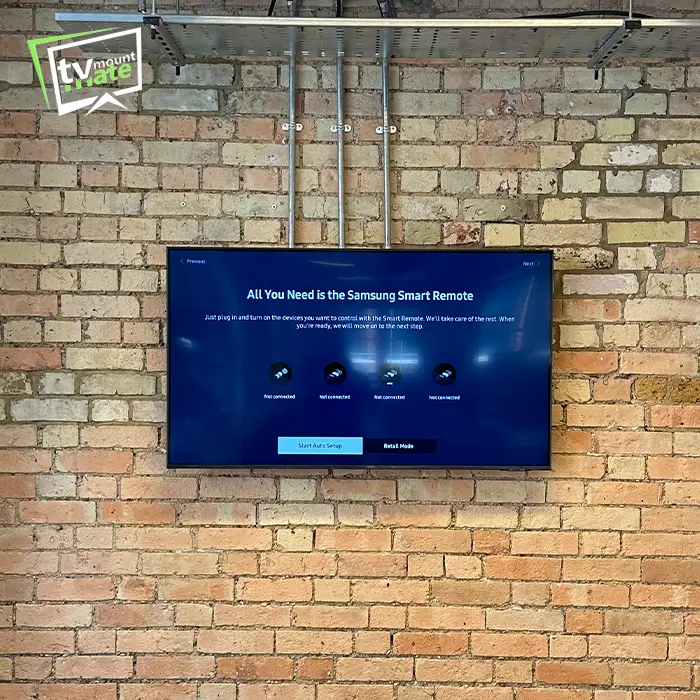
Many brick wall TV mounting issues are caused by poor installation rather than the wall itself. Here are the most common mistakes that can lead to loose or unsafe TV brackets.
Mortar is softer than brick, especially old lime mortar in Victorian homes. A fixing into a mortar joint can feel solid at first. Under the sustained weight of a TV and bracket, it can slowly pull free. We place fixings into the brick face wherever the bracket position allows.
The plugs in most bracket boxes are not rated for the long-term load of a TV bracket. On a brick wall, an undersized plug can compress and shift over time. We use Fischer or Rawlplug masonry fixings, coach screws, or M8 bolts depending on what the wall and bracket need.
Too much pressure, a worn bit, or too high a speed can open the hole wider than intended before the plug even goes in. On older London brick especially, this is easier to do than people expect. A damaged hole is harder to repair than most people think. Technique matters as much as the tool.
Every brick wall installation follows a careful step-by-step process, from assessing the wall to testing the finished bracket for long-term safety and stability.
We look at the brick type, mortar condition, and any obvious risks. We agree on the TV height and position before anything else happens.
We scan the wall before drilling. Hidden wiring and pipes are more common than people expect, even on solid brick walls.
Our lead installer uses a Milwaukee hammer drill with Bosch Blue Granite masonry bits for most brick jobs. On very hard or stony walls, he switches to an SDS drill. The right bit makes a cleaner hole and protects the fixing point.
We use Fischer or Rawlplug masonry fixings, coach screws, or M8 bolts where the job needs them. For full-motion brackets, we also consider the extra load created when the TV extends away from the wall.
Every fixing point is checked before the TV goes on. The bracket is levelled using a Stanley spirit level before the screen is attached.
On full-motion brackets, we test at full extension. We do not consider the job finished until we are happy the bracket is solid in every position.
We use professional masonry tools and trusted fixing systems chosen specifically for the wall, bracket, and TV being installed.
We do not rely on generic bracket-box fixings for brick wall installs. The TV is too valuable to cut corners on the fixings.
Not all brick walls are built the same. We assess the construction first so we can choose the safest drilling method and fixing approach.
Some old London red brick is very strong and holds just as well as anything in a modern build. But older walls can surprise you. Victorian and Edwardian properties often have lime mortar, which is softer than modern cement mortar. Some older council blocks also have very hard or stony sections where the drill bit can slip if the pressure is not controlled, opening the hole wider than intended. Old brick needs steady technique, not just a powerful drill.
Cavity walls are common in homes built from the 1960s onwards. What looks solid from the front has a gap inside. Fixing depth matters here. We check the wall construction before choosing the plug length and fixing method.
Newer brick is generally consistent and straightforward to drill. It is not always harder than old brick. Each wall is checked on arrival rather than assumed.
Concrete block walls need the right bit and controlled pressure. The wrong approach can fracture the block face before the plug has anything solid to grip.
Decorative unplastered surfaces need a correctly sized bit to reduce surface chipping around the hole. We take extra care with the finish on exposed brick.
Full-motion bracket on a converted flat. The previous installer had used undersized plastic wall plugs. We removed the bracket, replaced all fixings with heavy-duty masonry anchors matched to the TV and bracket weight, and remounted. Full-motion arm tested at full extension before leaving.
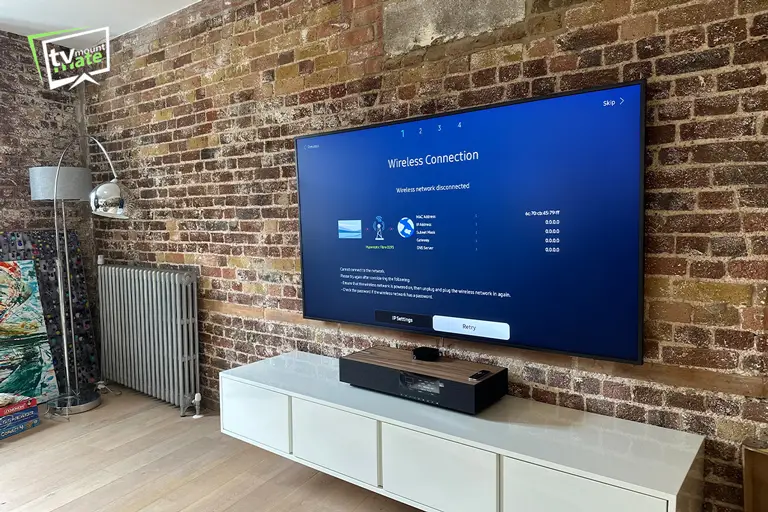
We do not usually chase cables into brick walls. For most brick wall jobs, neat surface trunking is the practical option. It runs along the wall, looks tidy, and can usually be painted to match.
If you are renovating and the walls are not plastered yet, get in touch before the work is finished. We can advise on TV position, cable route, and socket placement at no charge. Getting this right before the wall goes up saves a lot of hassle later. If electrical socket work is needed, a separate electrician will be required for that part.
Some wall conditions need extra attention before drilling begins. We inspect these first and explain any recommendations before carrying out the work.
None of these mean the job cannot be done. They mean we will talk to you before anything goes into the wall.
Find answers to the questions homeowners most often ask about mounting TVs on brick walls, fixings, brackets, and cable management.
Yes. Brick is usually a strong surface when it is in decent condition and the right fixings are used. We check the brick type, scan for hidden cables, and choose the fixing method based on what we find. We do not start drilling until we are happy with the plan.
Fischer or Rawlplug masonry fixings, coach screws, or M8 bolts depending on the wall and bracket. We choose on site after checking the brick type and TV weight. We never rely on the fixings that come in the bracket box.
You should drill into the brick face wherever the bracket position allows. Mortar, especially old lime mortar, is softer than the surrounding brick and can pull loose under sustained load. We avoid mortar joints as fixing points on period properties in particular.
Yes, in most cases. Full-motion brackets create more load on the fixing points when the arm is extended, so the fixing layout needs to account for that. We check the wall and bracket before committing to a fixing plan.
Not usually on finished brick walls. We do not chase channels into brick as part of a standard TV mounting job. Surface trunking is usually the cleanest option and can be painted to match. If you are renovating and want cables routed before the wall is finished, call us before the work starts and we can help plan it.
Not sure your wall is brick? These guides explain other wall types and cable options before you book.
No deposit. Pay on completion. Fixed price before any work begins.