
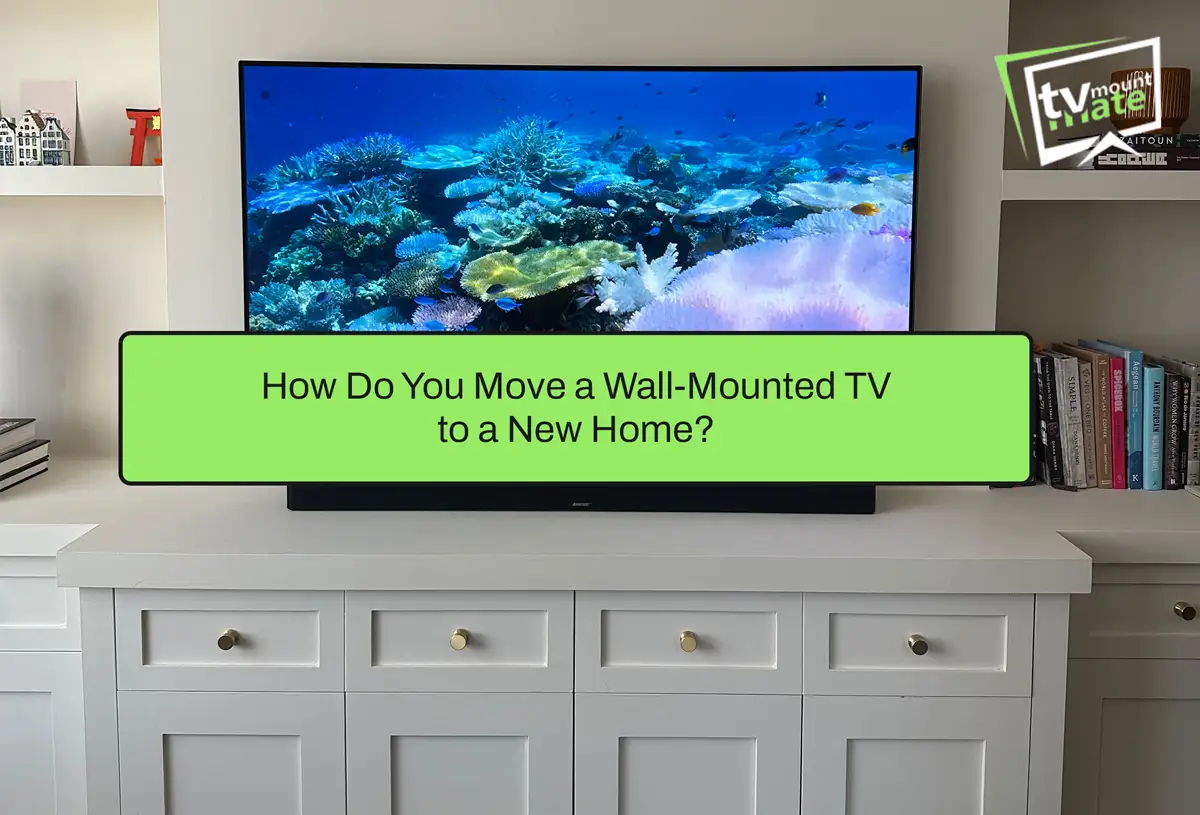

Switching from a TV stand to a wall mount changes one thing above everything else: the floor space the stand used to take up. What you do with that space is yours to decide, but it’s real space, not just a nicer way of saying “less clutter.”
A customer in SW11 showed me exactly what that looks like. They called me in August 2026 wanting a chair next to their TV, but the stand was in the way. Once it was gone, the chair fit right where they wanted it.
| Comparison | TV Stand | Wall Mount |
|---|---|---|
| Floor space | Takes up the footprint of the unit. | Frees that space up entirely. |
| Height | Fixed by the furniture underneath. | Set to whatever actually works for the room. |
| Watching from two spots | Fixed to one angle. | A full-motion bracket can turn towards either viewing position. |
| Kids and pets | Within easy reach at the front. | Fixed to the wall and can be set higher if needed. |
| Heavy AV gear (amps, turntables) | Built to hold and display it. | Needs separate shelving, not just the TV bracket. |
| Tricky walls (listed buildings, lath-and-plaster) | No drilling needed. | Sometimes not realistic without reinforcement. |
| Wall marks | None. | Fixing holes can be patched on request if you move out. |
The Height Question Isn’t About the TV, It’s About the Chair
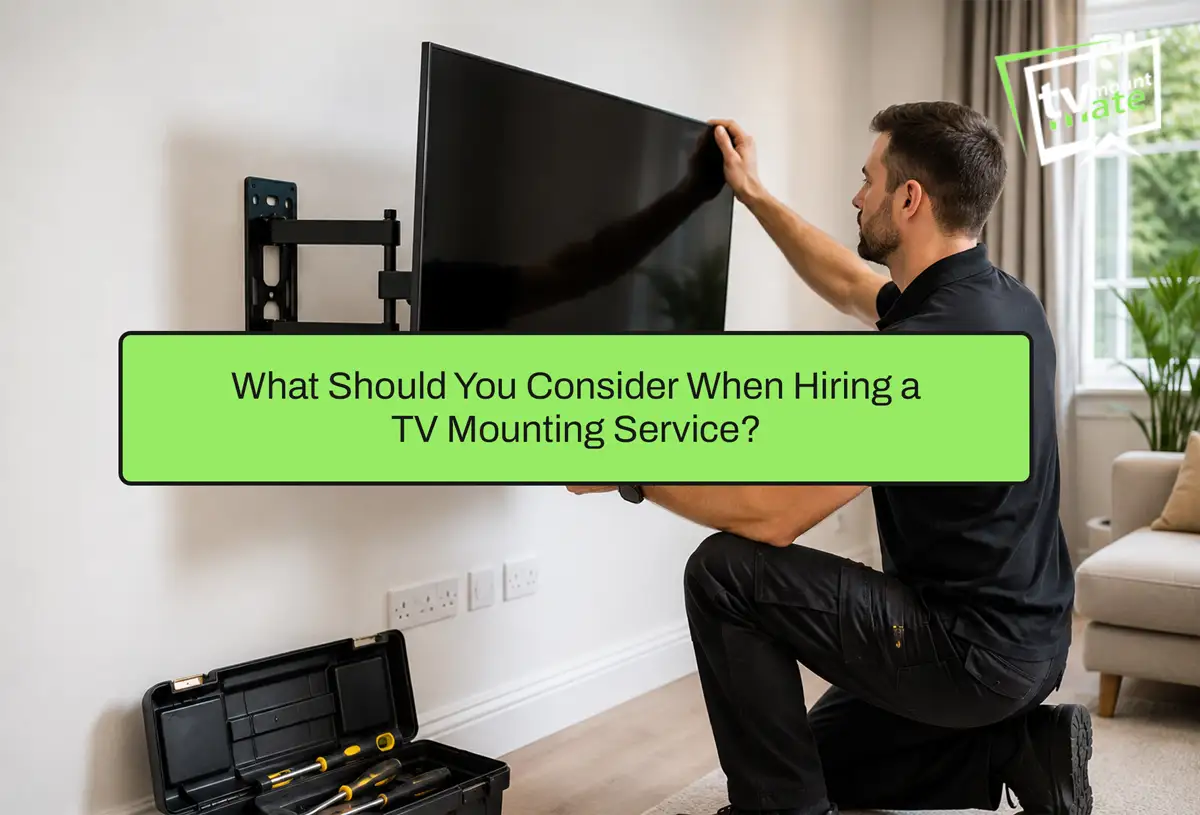
On that SW11 job, the customer had already picked out a chair. It was 80cm tall. That’s why they asked for the TV’s bottom edge at 105cm, not some standard number I picked. The chair came first. The TV height came second.
That’s how height should work on every job, not just this one. Check our full guide on how high to mount a TV if you want the full method, but the short version is this: measure the room you actually have, not a rule from the internet.
I also handled the soundbar installation underneath, right where they wanted it, once the height was locked in.
Watching From More Than One Spot
A job in NW3 in January 2026 was different. It was a Victorian house, newly renovated, with an open-plan kitchen and living room. The customer had a 55-inch LG C1 and wanted to watch it from both sides of the room, the kitchen and the sofa.
A fixed bracket couldn’t do that. I used a full-motion bracket instead, so the screen could turn towards whichever side someone was sitting on. See how I choose between fixed, tilting and full-motion brackets if you’re trying to work out which one fits your room.
Kids, Pets and Getting It Out of Reach
A good number of my calls aren’t about space or design at all. Someone’s toddler has started touching the screen, or throwing toys at it, and they want the TV mounted higher, out of reach. That’s a real, common reason people call me, not a footnote.
A stand isn’t automatically dangerous. But a wall mount gives you far more control over exactly how high the TV sits, and for a lot of parents, that control is the whole point of calling.
Glare Isn’t Always a Bracket Problem
People often think a tilting or full-motion bracket fixes glare on its own. Sometimes it helps. But on one job where glare was the exact issue, the bracket wasn’t the fix. The customer solved it by buying a TV with an anti-glare screen instead.
I’m not going to pretend a bracket solves every problem in the room. Sometimes the TV itself is the better fix.
What Actually Happens to the Room
Back to the SW11 job. Once the stand was gone, more than just the chair fit. The room got rearranged. A walkway that used to be blocked opened up. None of that happened because wall mounting is trendy. It happened because a piece of furniture that took up floor space was gone.
Behind the Screen
Most jobs include mounting a streaming box behind the TV, an Apple TV or a Fire Stick, so it’s out of sight but still reachable. It’s a small thing, but it’s part of getting the whole setup tidy, not just the screen.
The Parts Nobody Asks About
Wall mounting isn’t without a downside. Cables still need to go somewhere. I use trunking for that, sometimes D-Line, sometimes Screwfix’s own, depending on the job and what matches the wall. Full cable concealment is also an option if you want the wires fully hidden, not just tidied into trunking.
Two questions come up more than most, usually from renters. How easy is it to fix the holes when I move out? And am I allowed to cut into the wall to hide the cables? The holes are straightforward to patch, and I’ll do that as an add-on if asked, though it doesn’t come up often. The cable question has more to it than fits here, so I’ll cover that properly in its own guide.
Has a Stand Ever Been the Better Call?
I haven’t personally turned down a mount for this, but there are situations where a stand still makes more sense. A listed building with lath-and-plaster walls is one, since drilling isn’t always realistic there without extra reinforcement. Heavy AV gear like an amp or a turntable is another, since that needs real shelving, not a bracket holding a screen. I just haven’t had a job yet where either of those was the actual reason someone chose a stand.
Get a Fixed Quote
If a stand is in the way of how you actually want to use your room, send me your postcode, your TV size, your wall type if you know it, and a photo of the space. Get a fixed quote for TV wall mounting before you book. No deposit, and payment is due once the job’s done.
About the Author
Written by: TV Mount Mate
This guide is based on TV Mount Mate’s own experience: more than 10 years of hands-on TV wall mounting and over 6,000 installations.