

TVs pull out of plasterboard walls when the wall construction, fixing method, bracket design, wall condition and television load have not all been assessed together. A bracket may appear secure at first but loosen if the fixing method is unsuitable for the wall construction, bracket design and television load. This guide explains why failures happen, the warning signs to look for, and how a failed installation is properly assessed and corrected.
Why Do TVs Pull Out of Plasterboard Walls?
Plasterboard TV mounting failures can result from several recurring issues. In our experience repairing failed installations, it is usually one or more of the following.
Fixings unsuitable for the confirmed wall construction.
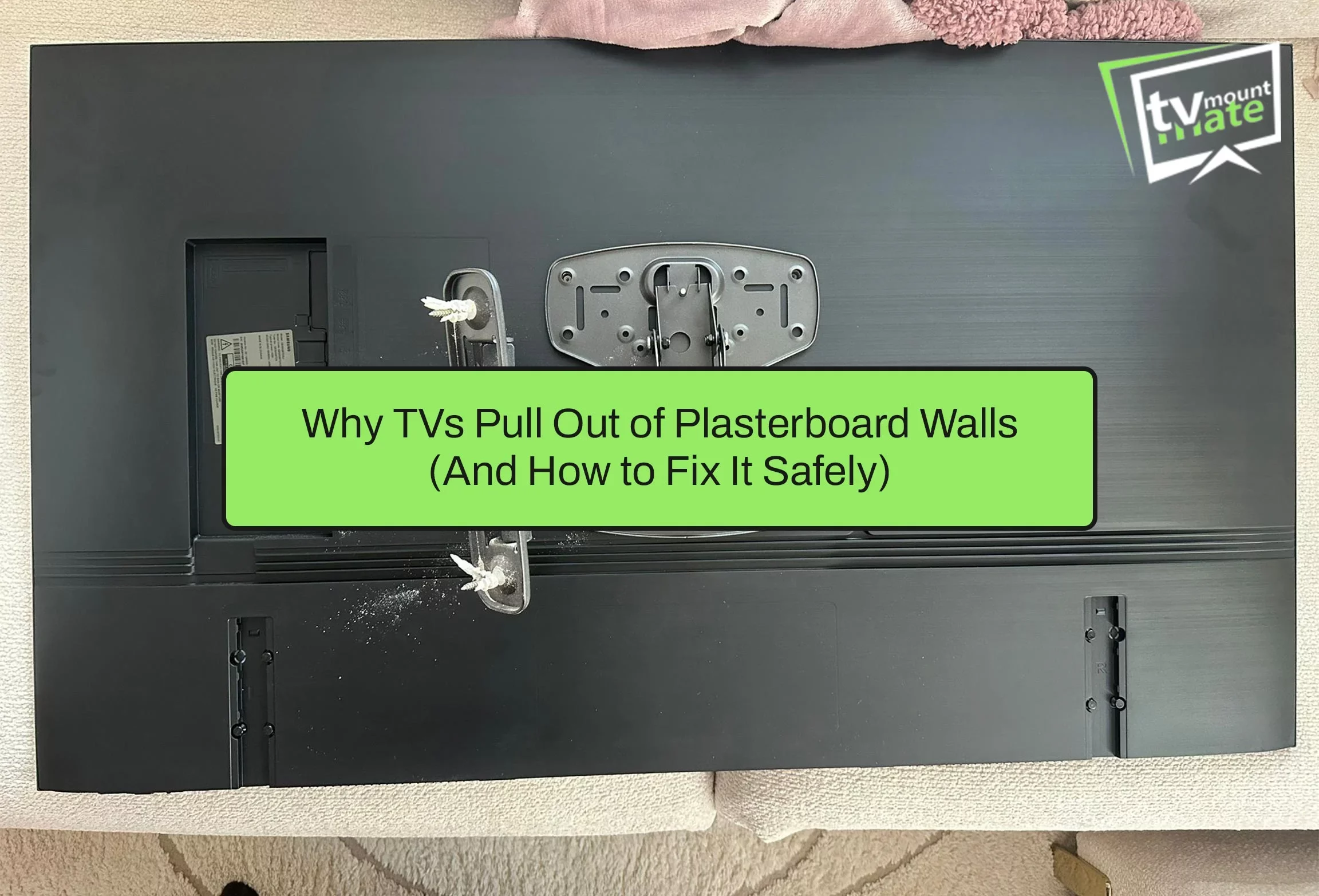
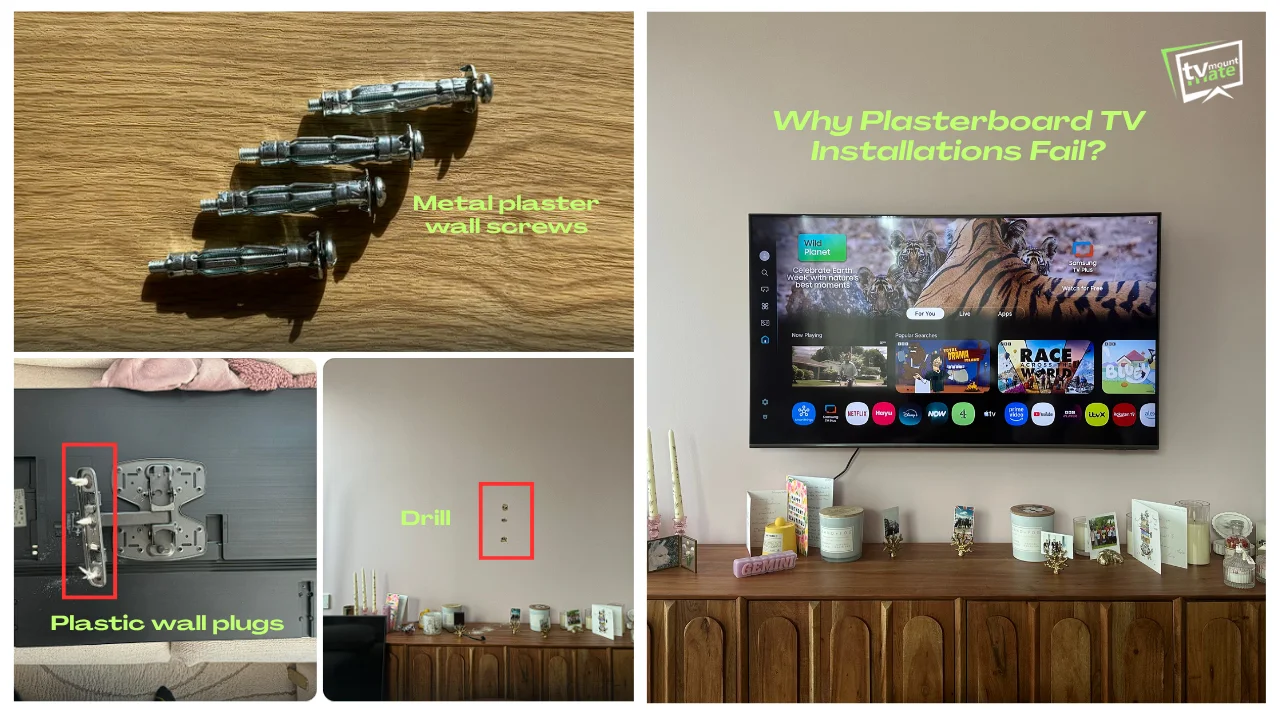
The fixings supplied with a bracket may not be suitable for the wall on which the bracket is being installed. They are not always suited to the specific plasterboard, cavity depth or dot-and-dab arrangement behind a particular wall.
Fixing holes drilled incorrectly or damaged.
A hole drilled larger than the fixing, at an awkward angle, or through already-weakened plasterboard leaves very little for that fixing to grip.
Bracket leverage not properly considered.
Full-motion brackets allow the television to sit away from the wall, and extending the arm increases the leverage placed on the fixing points. This does not make every full-motion bracket unsuitable, but the wall, bracket and fixing arrangement need to be assessed together, particularly for larger screens.
Wall condition or previous damage overlooked.
Cracks, old repairs, damp or holes from a previous installation can affect the condition and suitability of the proposed fixing positions, even when the surface looks fine from the front.
Poor wall-plate positioning or insufficient usable fixing positions.
A bracket’s wall plate needs enough sound, usable fixing points. If it is positioned across damaged plasterboard or too few usable points, the fixing is under strain from the start.
What Are the Warning Signs of a Failing TV Wall Mount?
Watch for:
- The TV beginning to lean forward unexpectedly
- A widening gap appearing behind the wall plate
- Movement when you touch the television or bracket
- Fixings that feel loose or turn when touched
- New cracking or damage around the fixing positions
- Plasterboard dust appearing below the bracket
- Unusual clicking or movement when a full-motion arm is adjusted
If you notice any of these signs, stop adjusting or moving the bracket. If the television feels unstable, arrange for it to be supported or removed rather than attempting to correct it yourself.
What Should You Do If a TV Bracket Is Pulling Away?
- Do not continue adjusting the bracket
- Keep people and pets away from the area
- Do not tighten loose fixings blindly
- Do not reuse damaged holes without assessment
- Arrange for the television to be supported or removed
- Have the wall, bracket and fixing positions inspected
This is not a situation to resolve with a quick DIY fix. A bracket that is already pulling away needs to be assessed before any further work is done.
Real Repair Example: 85-Inch Samsung QLED in Southgate
We were called to a property in Southgate, N14, where an 85-inch Samsung QLED television had begun leaning forward on its wall bracket. The television was mounted on a plasterboard wall.
On inspection, the bracket was visibly loose and pulling away from the wall. The plasterboard itself was not visibly cracked. The original installation had used the plastic plugs supplied with the bracket, but the holes that had been drilled were larger than those plugs, which meant the fixings never had enough material to grip properly. Over time, this let the bracket work loose.
We removed the television and bracket, then measured and drilled new fixing positions. The same bracket was reused, and the new positions were fixed using metal toggles.
There are no photographs available for this particular job.
This case is useful because there was no visible cracking, but the oversized holes and loose plugs had allowed the bracket to pull away. The failure came from a mismatch between the fixing supplied and the size of hole that had been drilled, not from every plastic plug being unsafe in every wall. A different hole, wall or television might behave differently. Each installation needs to be looked at on its own terms.
Can the Same Bracket or Fixing Holes Be Reused?
The bracket itself can sometimes be reused if it is compatible, undamaged and suitable for the corrected fixing arrangement. Failed, damaged or oversized fixing holes should not be reused automatically. The surrounding plasterboard needs to be assessed first, and the repair may require new fixing positions or reinforcement before another fixing is installed.
In the Southgate installation, the same bracket was reused, but new fixing positions were measured and drilled before the television was remounted.
How Does TV Mount Mate Assess a Failed Installation?
When we assess a failed plasterboard installation, we look at the condition of the television and bracket, and check for visible movement at the wall plate. We look at the wall construction and condition, including any damage around the previous fixing positions.
We also consider likely stud or frame positions, the design of the bracket’s wall plate, and the weight of the television rather than screen size alone. For full-motion brackets, we look at how far the arm needs to extend and the leverage that creates at the fixing points.
We normally use a Bosch wall detector together with a powerful magnet to help locate likely stud or frame positions before any drilling. These readings are useful, but they are one part of the assessment rather than an absolute guarantee of what is inside the wall, so we combine them with what we can see and measure directly. Where cables or pipes could be present, we also think about likely routes before drilling anything new.
From there, we decide whether the existing bracket and fixing approach can be corrected, or whether the installation needs repositioning, a different bracket, or a different fixing method suited to that wall.
How Can Future Plasterboard Mounting Failures Be Reduced?
The risk of future failure can be reduced by assessing the wall, bracket and television together before drilling. That starts with identifying the wall construction, checking that the bracket and television are matched to it, and working out which fixing positions are genuinely usable before anything is drilled.
For a fuller breakdown of this process, see our guide on what to check before mounting a TV on any wall.
When Should You Call a Professional?
It is worth arranging an assessment if:
- The TV is already leaning
- The wall plate is moving
- Fixings are pulling out
- The plasterboard is cracked or damaged
- A large television is mounted on a full-motion arm
- A previous installation has already failed
- You are uncertain about the wall construction
- There are multiple abandoned drill holes in the wall
TV Mount Mate offers a fixed quote before booking, with no deposit and payment on completion, across our TV mounting service area covering Greater London and selected areas of Essex and Kent. Contact TV Mount Mate to arrange an assessment.
TV Mount Mate: 10+ years’ experience. 6,000+ installations. 400+ five-star Google reviews. Fully insured up to £2 million.
About the Author
Written by: TV Mount Mate
This guide is based on TV Mount Mate’s own experience: more than 10 years of hands-on TV wall mounting and over 6,000 installations.